
How to Create a Monthly Budget in Canada: A Beginner’s Guide to Managing Your Money
If you've never created a budget before, you're not alone. Many people find it challenging to understand where their money goes each month or how to balance everyday expenses with their financial goals. The good news is that creating a monthly budget does not require financial expertise; it only takes a simple plan and consistent habits.
Whether you are trying to save more, pay down debt, prepare for unexpected expenses, or gain better control over your spending, a budget can help you make informed decisions about your money. This budgeting for beginners guide will show you how to create a monthly budget in Canada, track your income and expenses, set realistic spending goals, and build healthier financial habits that last.
This guide will walk you through budgeting for beginners, with simple steps to help you take control of your money, reduce financial stress, and start building savings.
What Is a Personal Budget?
A personal budget is a financial plan that helps you track income, expenses, savings,
and debt payments each month. Creating a monthly budget helps Canadians better
manage money and prepare for unexpected expenses.
Why Is Budgeting Important?
Before diving into how to create a budget, it’s important to understand why it matters.
A good budget helps you:
- Track where your money is going
- Avoid unnecessary overspending
- Reduce financial stress and manage debt
- Build savings for emergencies
- Feel more in control of your finances
If you’ve ever felt like your money disappears too quickly, a personal budget plan can change that.
How Do I Build a Budget?
Step 1: Calculate Your Monthly Income
This may seem like an obvious place to begin, but it’s actually where a lot of people get stuck!
The easiest approach is to jump in and simply start creating your budget. Begin with a blank worksheet and start by listing all sources of income, including:
- Employment income
- Side income
- Benefits or other regular payments
If your income changes from month to month, don’t worry. Many people have fluctuating income due to shift work, commissions, overtime, or seasonal employment.
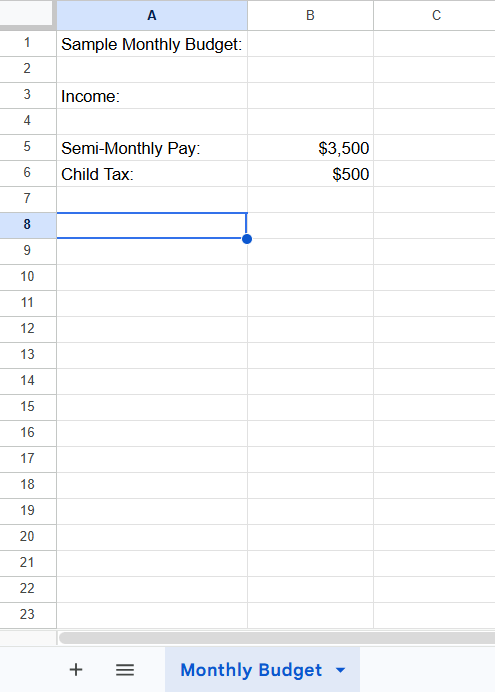
A helpful approach is to calculate your average monthly income by looking at your earnings over the past 6–12 months. This gives you a realistic starting point for building your budget.
Budgeting tip: It’s always better to slightly underestimate your income and overestimate your expenses. This gives you a cushion for unexpected costs.
Step 2: Fixed Expenses
Once you’ve listed your income, we’re going to move on to your expenses.
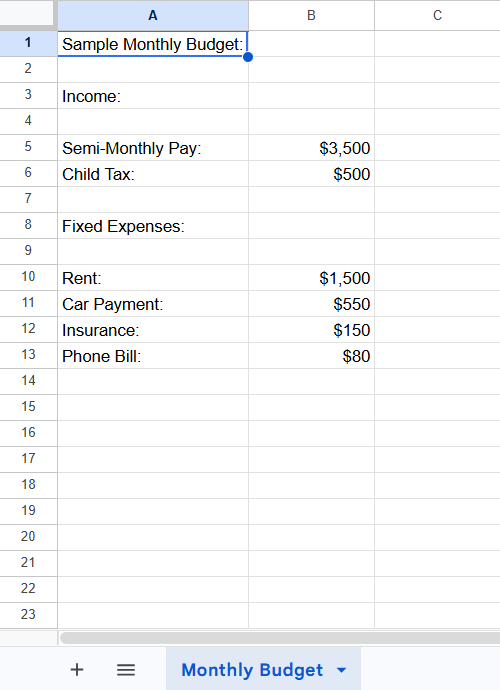
We’ll start with the ones that are consistent and recurring. These are called your “Fixed Expenses.” Generally, these will include:
- Rent or mortgage payments
- Insurance
- Loan payments
- Phone bills
These are typically the easiest expense to track, since they don’t change month to month.
Step 3: Variable Expenses
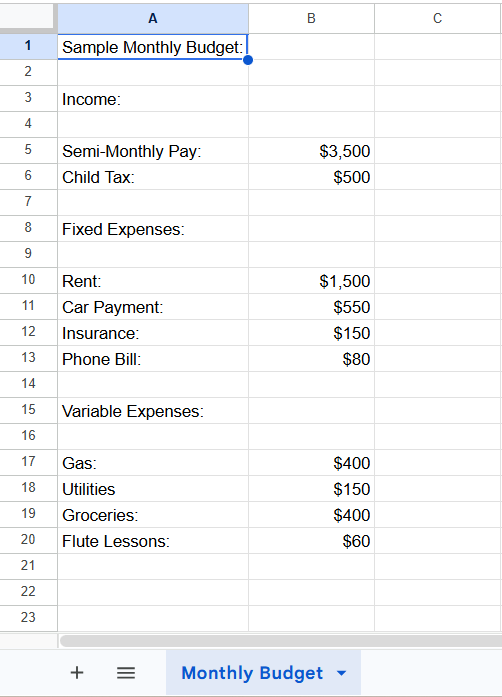
Next, we’ll look at your variable expenses. These are costs that occur every month but they fluctuate. This includes:
- Groceries
- Gas
- Utilities
For these, it’s easiest to look at your past expenses and find the average of what you’re spending. It’s best practice to round these up. Having a buffer is always better than falling short!
Step 4: Fun Money
Next is the portion of the budget that most people don’t usually consider, and is almost always the first thing cut from the budget.
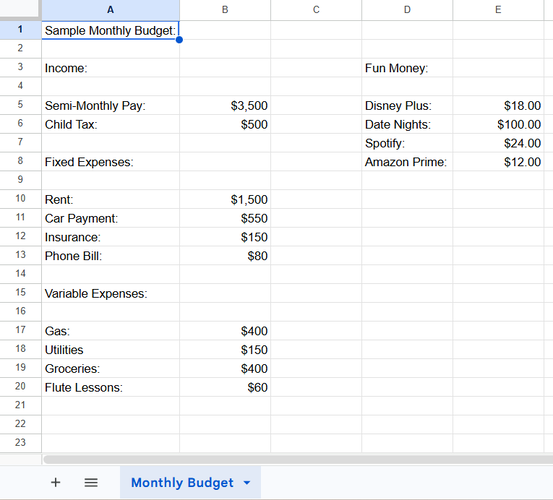
Your fun money may include:
- Streaming subscriptions
- Hobbies
- Dining out
- Entertainment
- Activities with family and friends
While these aren’t essential, they do contribute to your quality of life. A sustainable budget should always leave room for entertainment and fun!
Step 5: Make Savings Part of Your Budget
Next, we need to build savings into your budget.
It’s important to set aside money for a “rainy day fund.” You may have heard of the 50/30/20 rule (Needs/Wants/Savings & Debt), which suggests 20% of your income for savings and debt. For now, even starting with 10% is a great step forward.
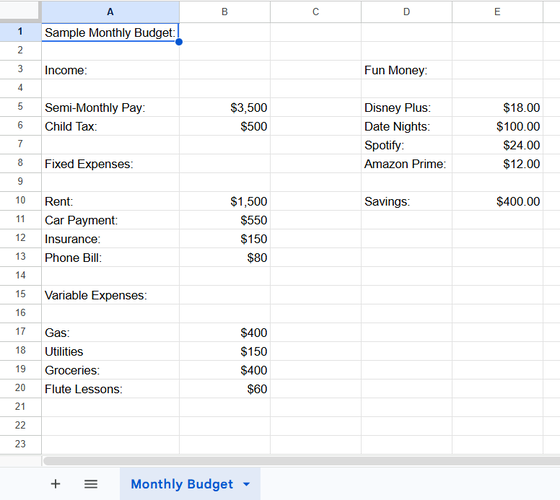
As you review your expenses, take time to go through your bank transactions carefully. You might find subscriptions or charges you’ve forgotten about that are quietly draining your account. Having a complete and accurate picture of your spending is critical to creating a budget.
Step 6: Add Everything Together
A Budget Surplus (Money Left Over)
Now that you’ve listed your income, expenses, and savings, it’s time to see how it all adds up.
Calculate your totals and determine whether you:
- Have money left over (a surplus), or
- Are spending more than you earn (a deficit)
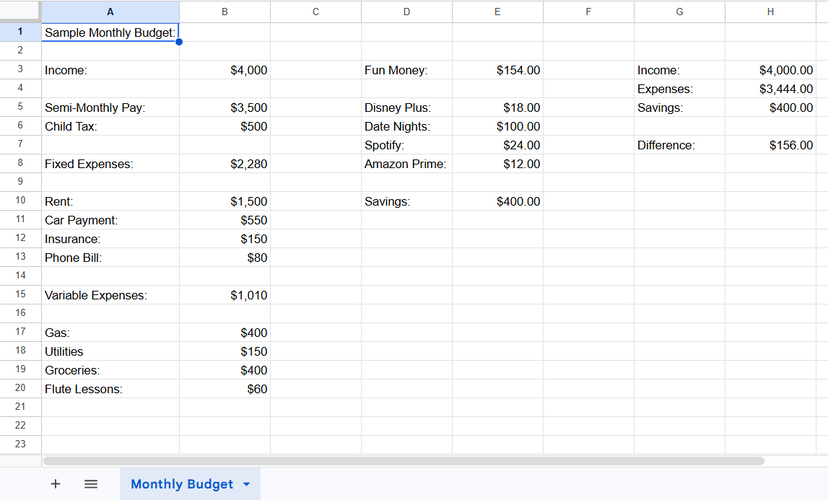
In this example, we can see that there is an extra $156 in our budget after accounting for all of our expenses and building our savings.
This buffer can help cover unexpected expenses or higher-than-usual bills. A good strategy is to direct that extra money into savings, especially if you’re working toward the 20% savings goal.
That said, balance is important. It’s okay to use some of that surplus to enjoy life. You’ve earned it!
A Budget Deficit (Spending More Than You Earn)
If your expenses are more than your income, don’t panic! This is something you can work through.
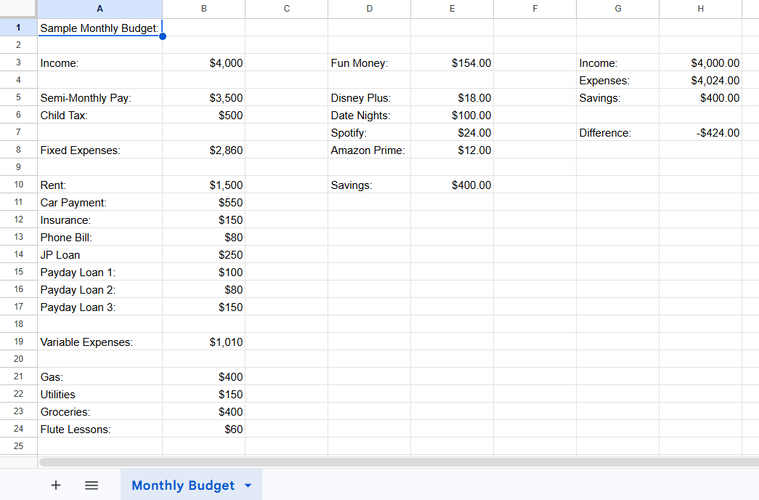
There are two main ways to address a deficit:
- Increase your income
- Reduce your expenses
It might be tempting to take out another loan to cover existing debt, but this often leads to a cycle that’s difficult to escape. Debt doesn’t solve debt.
Cutting savings might seem like an easy fix, but it can leave you vulnerable when unexpected expenses arise, often leading right back into debt.
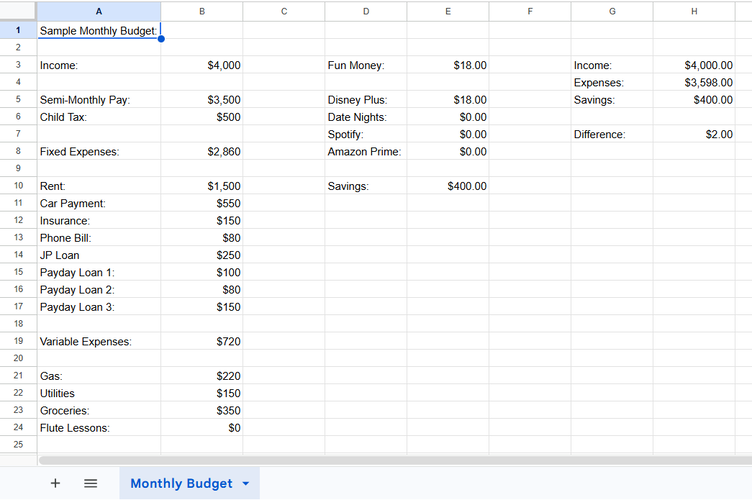
In many cases, reducing expenses is the most realistic option. Here are a few practical ways to do that:
- Transportation: Consider alternatives like carpooling, public transit, biking, or walking to reduce gas costs.
- Subscriptions: Cancel or pause services you can live without temporarily. Keep one or two that matter most.
- Groceries: Use coupons, shop sales, buy store brands, and try meal planning to stretch your budget further.
- Activities: Look for free or low-cost alternatives for hobbies, date nights, or kids’ activities.
These changes may feel restrictive at first, but they’re often temporary steps toward a more stable financial future.
Keep Reviewing Your Budget
Budgeting isn’t a one-time task, it’s an ongoing process.
Review your budget monthly:
- If you’re consistently underestimating expenses, adjust upward
- If you’re overestimating, you may have extra room to save or treat yourself
Over time, this process becomes easier and more accurate.
To Conclude
I hope this has been helpful to you! Budgets can be overwhelming, but with the right tools and some consistency, they can become much more manageable!
It’s important to remember that you don’t need these to be perfect. We just need a plan!
At JP Financial, we believe financial education is an important part of long-term financial wellness. Whether you’re working on improving your budget, managing debt, or rebuilding your credit, having a clear financial plan can make a significant difference.
Well wishes and happy planning,
T🌻
Frequently Asked Questions About Budgeting
How do I start budgeting if I live paycheck to paycheck?
If you're living paycheck to paycheck, start by tracking every expense for one month. Identify non-essential spending and create a simple budget based on your current income. Even saving a small amount each month can help build better financial habits over time.
What should I do if unexpected expenses ruin my budget?
Unexpected expenses happen to everyone. Adjust your budget where possible and use your emergency fund if needed. Afterward, review your spending and consider increasing your emergency savings to prepare for future surprises.
How much should I keep in an emergency fund?
A common recommendation is to save three to six months of essential living expenses. If that feels overwhelming, start with a goal of $500 or $1,000 and build from there.
Can budgeting help improve my credit?
Yes. Budgeting helps you make loan and credit card payments on time, avoid missed payments, and reduce debt, all of which can positively affect your credit over time.